
Nicorette Nicotine Gum Fruit Chill - Is It Worth It?
- 2 days ago
- 19 min read


Table of Contents
What is Nicorette Nicotine Gum - Fruit Chill?
The-flavor-arc,-by-the-clock

Nicorette Nicotine Gum is the oldest and most popular nicotine gum on the market. The Nicorette Fruit Chill is one of its dual-coated versions, which switches the flavor from the usual mint to a fruity taste.
This chewing gum is not ordinary gum. It promises to help smokers curb their nicotine cravings. Its active ingredient, the FDA-approved nicotine polacrilex, is the key to making that possible. The gum releases small, controlled amounts of nicotine to satisfy one's cravings, helping them stay away from the toxins and harmful tar from cigarettes.
What People Are Saying
Here are the customer reviews for the Nicorette Nicotine Gum - Fruit Chill found across different stores and websites.

Nicorette
The reviews on the official Nicorette website are mostly positive. It has received an overall rating of 4.6 / 5 stars.
The people like how effective the gum is at stopping them from lighting a cigarette. They also liked how the flavor is good but not too strong. One customer also noted that as long as you follow the "chew and park" method, this gum will not cause any discomfort.
However, a few users claimed that the taste is terrible or the flavor doesn't last long. Others complained about damaged packaging or missing gums.


Amazon
The reviews on Amazon are also mostly positive, with 85% of reviewers giving it 5 stars. Overall, it has an average rating of 4.7 out of 5 stars.
According to users, one of the biggest selling points of Nicorette Nicotine Gum – Fruit Chill is its flavor. Many reviewers say it has a refreshing taste that makes it more enjoyable than other nicotine gums. They also report that it actually helps reduce nicotine cravings. One reviewer shared that using this gum helped them stay smoke-free for three months.
There are a few negative comments. One reviewer disliked the taste of the chewing gum. Another gave it one star only because the gums in the package they received are all stale. Another complained about its price - it is more expensive than any of the alternatives.


Walmart
The ratings on Walmart are also mostly on the positive side. The Nicorette Nicotine Gum received 4.5 out of 5 stars. Seventy-eight percent (78%) gave it 5 stars, and only eight percent (6%) gave it one star.
Many reviewers enjoyed the fruity taste and found it effective at managing nicotine cravings. One user commented about its texture. They said the Nicorette gum is a little firmer, but that’s not a problem as it helps with the oral fixation.
Most of the negative reviews are from people who have not received their orders or received the wrong product. One standout was a person who said that the Nicorette nicotine gum is more addictive than cigarettes, so people should stay away.


Target
The rating on Target is also the same. The people who like the product significantly outnumber the ones who don’t. It has received an overall rating of 4.6 stars out of 5.
As with reviews on other platforms, effectiveness is the main reason users recommend this product. One reviewer said they had been smoke-free for six years and credited Nicorette Nicotine Gum for helping them quit. People also love the flavor. One particular comment said it’s refreshing, as it does not feel like they are chewing medicine.
Speaking of chewing, users also noted that this gum has a good texture. It is firm at first, then gradually softens, but does not turn rubbery. However, one one-star review contradicts that. The reviewer said that the texture is grainy and not good. Also, similar to the complaints on other platforms, they said that the flavor is only there for a few seconds.


The reviews on Drugs.com are different. It’s not one-sided, like on other platforms. The overall rating is 6.0 out of 10.
Those who reported that they had a positive experience claimed that using the Nicorette gum was better than cold turkey. However, one is concerned since Nicorette has not done any research on its effects after the recommended 12-week program.
Another customer claimed that the Nicorette Nicotine Gum only replaced their addiction with a new addiction. Another talked about the negative side effects, like cavities and hair loss. They even labelled the gum as just another tool for the nicotine industry to “profit off your weakness.”


Pharmica

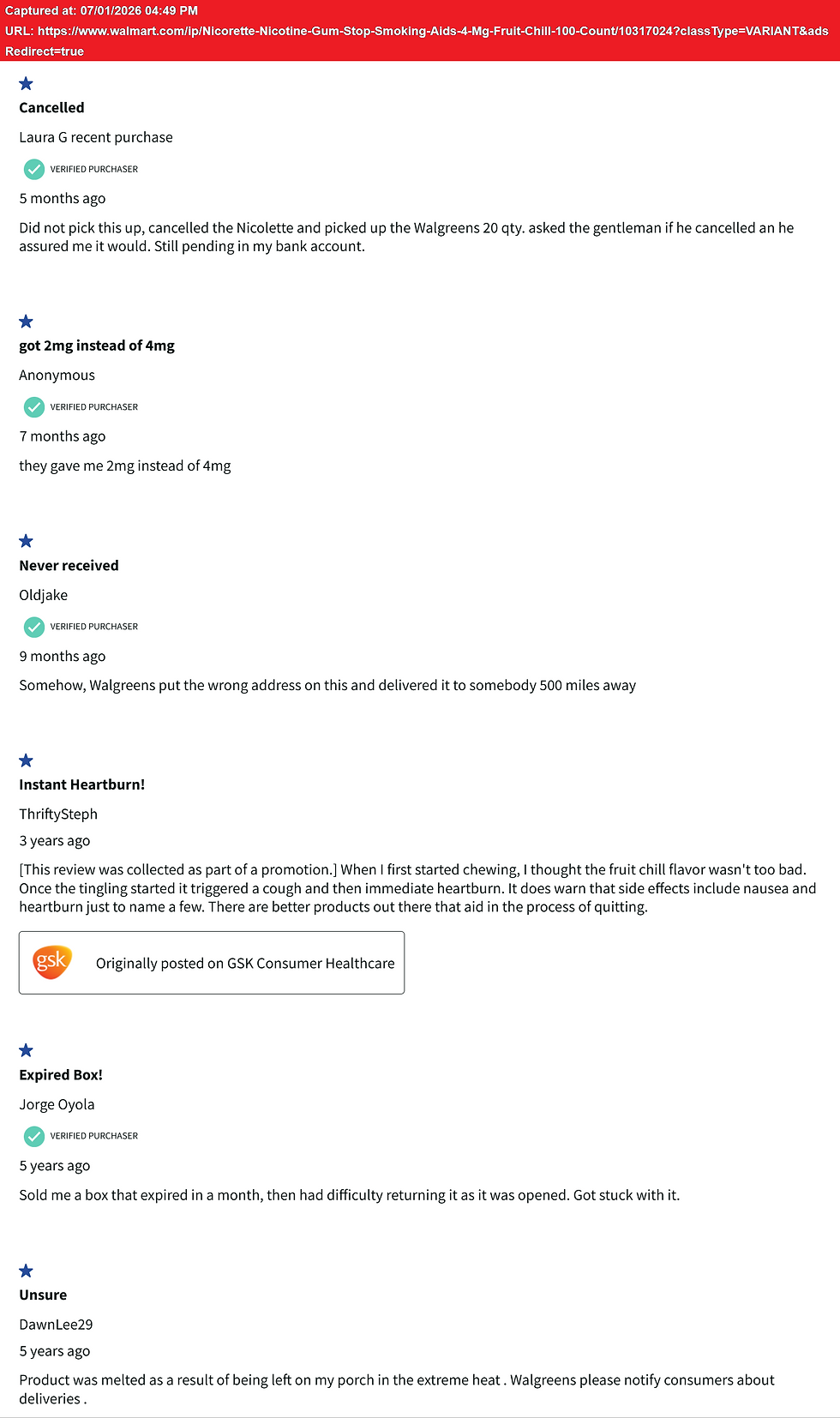
Walgreens
Customers who bought the Nicorette gum on Walgreens also liked it. The overall rating is 4.5 out of 5 stars. Most of them loved the flavor, but one customer who gave it 5 stars said the taste was just tolerable at first then fades very quickly.
Also, they noted that it can cause mouth irritation if you keep chewing for too long.
On the contrary, one reviewer that gave the Nicorette nicotine gum only one star said the flavor wasn’t too bad. However, when the tingling starts, it can trigger a cough and heartburn. They said that if you want to stop smoking, there are better products out there that can help you.


Video Reviews
A video from a dentist on Instagram said that they recommend Nicorette to their patients who smoke to stop them from destroying their teeth with cigarettes. But please note that it is a paid ad.
Dr. Lezlie Gonzales DO, MS also made a video about Nicorette chewing gums on Instagram. She said that it is a great alternative to vaping, which increases a person’s nicotine cravings three times more than a pack of cigarettes.
One video on YouTube compared the Nicorette Nicotine Gum with another stop smoking aid. The content creator said that nicotine should not be the solution to your nicotine cravings. Another video agreed on this. They said that you need nicotine-free products for a successful cessation. The comments on the video, however, disagreed. They claimed that the nicotine gums worked for them.
Perhaps the most interesting divide in user experiences comes from long-term use. Similar experiences have also been documented in medical literature, where some long-term users reported difficulty stopping nicotine gum because withdrawal symptoms, including anxiety, irritability, and strong cravings, returned once they tried to quit.
Taken together, customer experiences paint a balanced picture. Nicorette appears to be an effective smoking cessation aid for many people when used as directed. Still, success often depends on treating it as a temporary tool rather than a permanent replacement for cigarettes.
How To Use the Nicorette Nicotine Gum
Nicotine gums are not like regular chewing gums. You need to follow the “park and chew” method. Not following this method can cause issues such as nausea and heartburn. Here’s how to do it.
Do not eat 15 minutes before chewing a Nicorette Nicotine Gum or while you are chewing it.
Chew the gum slowly and deliberately until you feel a tingling sensation in your mouth.
“Park” the gum between your cheeks and the gum line. Stop chewing.
Wait for the tingling sensation to stop. It lasts about 1 - 2 minutes.
Once the tingle is gone, start chewing the gum again and repark when the sensation returns.
Repeat this cycle for approximately 30 minutes then discard the gum.
Dosage and Recommended Protocol
Here is the FDA-approved dosage:
2mg: For smokers who smoke their first cigarette more than 30 minutes after waking.
4mg: For smokers who smoke their first cigarette within 30 minutes of waking (indicating higher nicotine dependence).

The manufacturer recommends following a gradual 12-week program:
Weeks 1–6: 1 piece every 1–2 hours (minimum 9 pieces/day; maximum 24 pieces/day)
Weeks 7–9: 1 piece every 2–4 hours
Weeks 10–12: 1 piece every 4–8 hours
After Week 12: Discontinue use

The gradual reduction is an important part of the treatment. Rather than stopping nicotine abruptly, the schedule is designed to slowly decrease your dependence while giving your body time to adjust.

Although Nicorette is available without a prescription, it isn't intended for continuous use. Health professionals generally recommend limiting nicotine replacement therapy to the suggested treatment period unless a healthcare provider advises otherwise. Research has found that a small percentage of users continue chewing nicotine gum for months or even years after quitting cigarettes, making it harder to become completely nicotine-free.

What People Love
It genuinely curbs cravings. Several reviews report that the Nicorette gum significantly drops the urge to smoke within minutes of using one. The effect of one piece of gum can last for an hour or more. This effectiveness has led to real quit stories. Some users who had 25-, 35-, and 40-year habits said the gum plus a support program made them stop.
It tastes good. A lot of reviewers love the flavor of the Fruit Chill Nicorette Nicotine Gum. They called it “refreshing” or “much better than the usual mint ones.” Some also appreciate that it doesn't have the medicinal taste often associated with nicotine replacement products.
Its texture is better than other gum’s. The Nicorette Nicotine Gum, according to the reviews, has a superior texture compared to other nicotine gums. It starts firm and then becomes soft as you chew, but not to the point where it is stringy, rubbery, or sticks to your teeth.
It may be helpful during a weight loss journey. This nicotine gum requires you to not have food in your mouth for over 30 minutes. It can also satisfy the oral fixation associated with smoking, which may make it easier to avoid reaching for food or cigarettes. But please note that this chewing gum is not intended or approved as a weight-loss product. Do not buy it if that is your only goal.

What People Don’t Like
No flavor longevity. A lot of the people who reviewed the product, including those who liked it, said the flavor doesn’t last long. It fades after 30 seconds or 1 minute. After that, you only keep it in your mouth for the dose. Unfortunately, this is the truth for all NRT gums.
Side effects are common and under-communicated. Nicotine gums have a lot of side effects. In Nicorette’s case, these are underemphasized. So many users don’t know it can cause issues like hiccups, heartburn/acid-reflux sensations, nausea, dry mouth, and jaw soreness. Some users even noted that these side effects can hit as early as a few seconds.
Jaw soreness can become an issue with frequent use. Chewing Nicorette several times a day can put extra strain on the jaw, and some long-term users report ongoing jaw discomfort. Repetitive chewing may aggravate the temporomandibular joint (TMJ), especially in people who already have jaw pain or clenching habits. Its sticky texture can also be uncomfortable for some people with dentures, crowns, bridges, or other dental restorations, making nicotine gum a less suitable option for certain users.
The texture turns rubbery. The texture of the Nicorette nicotine gum does not turn rubbery as quickly as off-brand gums. However, it still does if you overchew. Users should strictly follow the chew and park method to avoid this.
The quality of the gums vary. One long-time user highlighted a possible piece-to-piece variability. They claimed that some pieces feel like they have no nicotine in them, while some do. It matters a lot because it significantly reduces the effectiveness of one pack.
Nicorette Nicotine Gum is expensive. Many reviewers mention that it costs more than some alternatives. Even so, several users say they consider it a worthwhile investment because the cost of smoking is even higher, especially if the gum helps them quit for good.

The Ugly - What the Manufacturer Doesn’t Want You to Hear
There is one gigantic problem with nicotine gums. They can stop a person from smoking, but the person can get addicted to the gum. Some said that it has been years since they stopped smoking, but they are still using the gum today. One customer claimed that they called the manufacturer’s helpline to ask whether using the gum after the 12 week support program is dangerous. The manufacturer reportedly was not able to provide an answer, as their studies don’t go beyond the recommended period.
Meanwhile, on a video found on TikTok, a content creator said they never smoked but they got addicted to nicotine gums.
That said, nicotine gums only replace one problem with another.
Some Users Replace One Addiction With Another

Nicorette is designed to be used for up to 12 weeks, but not everyone stops within that timeframe. Research estimates that around 5% to 9% of users continue chewing nicotine gum beyond the recommended program, with some relying on it for years. While they've quit smoking, they may still be dependent on nicotine.
Some long-term users also report finding it difficult to stop the gum itself. A 2025 case report described a patient who developed severe anxiety and withdrawal symptoms after abruptly stopping nicotine gum following years of daily use. Although this isn't the typical experience, it shows that nicotine dependence can persist even after cigarettes are gone.
Long-Term Nicotine Use Still Has Health Effects
Unlike cigarettes, nicotine gum doesn't produce smoke-related toxins. However, nicotine itself still affects the body.
Studies have linked prolonged nicotine exposure to insulin resistance and hyperinsulinemia, while nicotine can also temporarily raise heart rate and blood pressure by narrowing blood vessels. These effects are generally mild for healthy adults but may be more significant for people with heart disease or uncontrolled hypertension. That's why Nicorette recommends consulting a healthcare provider before use if you have certain cardiovascular conditions.
Oral Health Can Also Be Affected
Using nicotine gum regularly may also affect oral health. Nicotine reduces blood flow to gum tissue, which may slow healing after dental procedures and contribute to gum problems over time. Frequent chewing can also lead to jaw soreness, especially in people with TMJ disorders, while the sticky gum may cling to dentures, crowns, bridges, or other dental work.
Use Extra Caution in Certain Situations
Nicorette should be used carefully during pregnancy or breastfeeding and only under medical supervision, as nicotine can cross the placenta and pass into breast milk.
It's also important to keep the gum out of reach of children. Because it looks and tastes like regular chewing gum, accidental ingestion can lead to serious nicotine poisoning.
The Cost of Long-Term Use
Another downside is the cost. While many people consider Nicorette worthwhile during a quit attempt, using it beyond the recommended program can become expensive. For some long-term users, the ongoing cost can eventually approach what they once spent on cigarettes.
Overall, Nicorette remains an effective smoking cessation aid when used as directed. The biggest concern isn't the product itself—it's using it far longer than intended. Following the recommended treatment plan gives users the best chance of quitting both cigarettes and nicotine for good.
Ingredients
Here’s the full ingredients list for the Nicorette Nicotine Gums.
Active Ingredient: Nicotine Polacrilex (2mg or 4mg)

Inactive Ingredients:
Acesulfame Potassium
Butylated Hydroxytoluene (BHT)
D&C Yellow No. 10
FD&C Blue No. 1
Flavor (Natural and Artificial)
Glycerol
Gum Base
Hypromellose
Menthol
Sodium Carbonate
Sodium Saccharin
Sorbitol
Titanium Dioxide
Xylitol (2mg or 4mg)
Inactive Ingredients:
Acesulfame Potassium
Butylated Hydroxytoluene (BHT)
D&C Yellow No. 10
FD&C Blue No. 1
Flavor (Natural and Artificial)
Glycerol
Gum Base
Hypromellose
Menthol
Sodium Carbonate
Sodium Saccharin
Sorbitol
Titanium Dioxide
Xylitol
Some of these ingredients have received more attention than others. Here's a closer look at what they do and what current research says.
Nicotine Polacrilex - This is the ingredient that makes Nicorette work. It delivers controlled amounts of nicotine to help reduce withdrawal symptoms and cigarette cravings, making it easier for smokers to quit without the harmful tar and toxic chemicals found in cigarettes. It has been extensively studied and is considered safe and effective when used as directed for smoking cessation.
Acesulfame Potassium (Ace-K) - This is an artificial sweetener that is 200 times sweeter than sugar. While it is FDA-approved, a 2025 review in Food Chemistry raised emerging concerns about genotoxicity and gut microbiome disruption. After a re-evaluation of EFSA, they noted that safety concerns "could not be excluded" for the genotoxicity of Ace-K and its degradation products.
Butylated Hydroxytoluene (BHT) - This antioxidant preservative is generally considered safe (GRAS) by the FDA. Some animal studies have suggested potential endocrine-disrupting effects at high doses. However, the gums don’t expose a person to such levels.
D&C Yellow No. 10 / FD&C Blue No. 1 - These synthetic food dyes warrant scrutiny. Some European studies link the FD&C Blue No. 1 (Brilliant Blue) to hyperactivity in children. In the EU, products that use this dye should have a warning label. Meanwhile, D&C Yellow No. 10 (Quinoline Yellow) is banned in the US for food use but permitted in drugs and cosmetics. Nicotine gums are considered drugs.
Titanium dioxide (TiO2) - This ingredient is a white pigment that serves as a whitening agent in Nicorette gums, giving the gum its characteristic white appearance. It is banned by the EU because TiO2 nanoparticles can break DNA strands, do chromosomal damage, and cause inflammation. This is confirmed in a 2023 study published in Genotoxicity Evaluation of Titanium Dioxide Nanoparticles In Vivo. The FDA did not ban it, stating that the evidence for genotoxicity at typical human exposure levels is not conclusive.
Sucralose and Sorbitol - Sucralose is a sweetener that is approximately 600 times sweeter than sugar. A human’s body cannot metabolize it. While it is FDA-approved, a 2022 study in Frontiers in Nutrition found that 10 weeks of sucralose consumption induced gut dysbiosis (disruption of the gut microbiome) in mice. Then in 2019, a study in the British Journal of Nutrition found that even short-term sucralose consumption altered the metabolic response and gut microbiome of healthy adults. Sorbitol may cause bloating, gas, or diarrhea when consumed in large amounts, while some studies have explored whether artificial sweeteners such as sucralose could influence the gut microbiome. However, the health implications at typical consumption levels remain uncertain.
Sodium Carbonate – Sodium carbonate helps create the right pH inside the mouth so nicotine can be absorbed more efficiently. This improves the gum's effectiveness, although it may contribute to mild mouth or stomach irritation in some users.
Gum Base – The gum base provides Nicorette's chewy texture. Like many modern chewing gums, it contains synthetic polymers. Emerging research suggests that chewing gum may release small amounts of microplastic particles during use, although the long-term health effects of this exposure are still being investigated. For most users, this reinforces the importance of using nicotine gum as intended rather than relying on it indefinitely.
Are These Ingredients Safe?

Overall, the ingredients used in Nicorette comply with current regulatory standards for nicotine replacement therapy, and the product remains an FDA-approved aid for smoking cessation. While some inactive ingredients have been the subject of ongoing research, many of the reported concerns come from animal studies or emerging evidence that has yet to establish clear health risks at the amounts found in the gum.

A Comprehensive Critical Review of Nicorette Gum: Health Risks, Ingredients, and Addiction Concerns
Nicorette, introduced in the United States in 1984 as the first nicotine replacement therapy (NRT) product, has helped millions attempt to quit smoking. Now available over-the-counter and manufactured by Haleon (formerly GSK Consumer Healthcare), it is widely viewed as a safe alternative to cigarettes. However, a closer examination of its long-term use, ingredient profile, cardiovascular effects, and potential for secondary addiction reveals significant negative aspects that warrant consumer caution.
The Risk of Secondary Addiction
Nicorette is designed to be a temporary aid, with manufacturers recommending a maximum use period of 12 weeks. Despite this, a substantial subset of users simply transfers their nicotine addiction from cigarettes to the gum.
Long-Term Dependence
Research indicates that between 5% and 9% of Nicorette users rely on the product for longer than the recommended three months, with many continuing for years [](https://www.webmd.com/smoking-cessation/features/addicted-to-nicorette ). Because nicotine itself is the addictive chemical in tobacco, the gum can perpetuate physical dependence. Clinical case reports have documented individuals chewing 10 to 14 pieces of nicotine gum daily for several years, unable to quit without experiencing severe psychological withdrawal symptoms such as anxiety, depression, irritability, and difficulty concentrating [](https://pmc.ncbi.nlm.nih.gov/articles/PMC12086951/ ).
The Danger of "Cold Turkey" Cessation
When long-term users attempt to quit Nicorette abruptly, they often experience a severe rebound effect. A 2025 case report published in Cureus detailed a patient who chewed nicotine gum for three years and suffered debilitating anxiety and psychological distress upon sudden cessation, requiring professional psychiatric intervention and pharmacotherapy (Bupropion) to manage the withdrawal [](https://pmc.ncbi.nlm.nih.gov/articles/PMC12086951/ ). This highlights that while Nicorette lacks the carcinogens of tobacco smoke, its addictive grip can be profound and clinically significant.
Metabolic and Cardiovascular Health Concerns
While significantly safer than inhaling combustible tobacco, the continuous delivery of nicotine into the bloodstream via Nicorette poses its own set of systemic health risks, particularly with prolonged use.
Insulin Resistance and Hyperinsulinemia
A landmark study published in Circulation (the journal of the American Heart Association) investigated the metabolic effects of long-term nicotine gum use in healthy, non-smoking middle-aged men. The researchers found that long-term use of nicotine-containing chewing gum is strongly associated with insulin resistance and hyperinsulinemia [](https://www.ahajournals.org/doi/10.1161/01.cir.94.5.878 ). The degree of insulin resistance was negatively correlated with the extent of nicotine use, as measured by plasma cotinine levels. The authors concluded that nicotine is likely the primary constituent in tobacco responsible for metabolic abnormalities linked to cardiovascular morbidity, advising that NRT use should be strictly transient and limited [](https://www.ahajournals.org/doi/10.1161/01.cir.94.5.878 ).
Cardiovascular Stress
Nicotine is a potent vasoconstrictor and stimulant. Chewing nicotine gum acutely increases heart rate by 10 to 15 beats per minute and elevates blood pressure by up to 5 mmHg [](https://www.sciencedirect.com/science/article/pii/S073510979700079X ). While these increases may seem minor in isolation, chronic elevation places undue stress on the cardiovascular system. A comprehensive systematic review published in Archives of Toxicology confirmed that the most commonly observed cardiovascular impacts of acute NRT use are increased heart rate, elevated blood pressure, and increased cardiac output [](https://pmc.ncbi.nlm.nih.gov/articles/PMC5364244/ ). Individuals with pre-existing hypertension, heart disease, or recent cardiac events are explicitly warned by Nicorette's own labeling to consult a physician before use.
Oral Health and Dental Complications
The method of delivery — prolonged chewing and "parking" the gum against the oral mucosa — creates localized issues within the mouth.
Gum Tissue Damage from Vasoconstriction
Because nicotine is a vasoconstrictor, parking Nicorette gum against the inner cheek or gums reduces localized blood flow to the periodontal tissues [](https://pmc.ncbi.nlm.nih.gov/articles/PMC11527480/ ). This impaired circulation hampers the delivery of oxygen and nutrients to gum tissue, rendering it more susceptible to infection and impairing its ability to heal after dental procedures or injury [](https://pmc.ncbi.nlm.nih.gov/articles/PMC11527480/ ). Over time, this can contribute to receding gums and compromised periodontal health.
Jaw Pain, TMJ, and Damage to Dental Work
Chronic jaw pain from constant chewing is the most frequently reported health complaint among long-term Nicorette users [](https://www.webmd.com/smoking-cessation/features/addicted-to-nicorette ). The repetitive mechanical action can exacerbate temporomandibular joint (TMJ) disorders. Furthermore, the gum's sticky texture can adhere to and damage dental work, including dentures, partial bridges, and dental caps, making it unsuitable for many patients with existing dental restorations [](https://www.medicalnewstoday.com/articles/is-nicotine-gum-bad-for-your-teeth ).
Controversial Inactive Ingredients
Beyond nicotine itself, the inactive ingredients used to formulate, flavor, and preserve Nicorette raise separate health concerns. The full inactive ingredient profile of the standard 2mg gum includes:

Acesulfame Potassium (Ace-K): A 2017 study published in PLoS One found that Ace-K perturbed gut bacteria and associated functional pathways in mice, potentially increasing the risk of chronic inflammation and intestinal injury [](https://pmc.ncbi.nlm.nih.gov/articles/PMC5464538/ ).
BHT: The Environmental Working Group (EWG) has flagged BHT as a concern, noting that prolonged exposure in animal studies has been associated with liver and kidney damage and tumor promotion [](https://www.ewg.org/news-insights/news/2025/04/despite-health-harm-concerns-bha-and-bht-remain-food-and-cosmetics ). The FDA currently classifies it as GRAS at low concentrations, but multiple states have moved to restrict its use in food products.
Microplastics from Gum Base: Like most modern chewing gums, Nicorette's synthetic gum base releases microplastics during chewing. A 2025 pilot study by the American Chemical Society found that chewing gum releases between 100 and 600 microplastic particles per gram of gum into saliva [](https://www.acs.org/pressroom/presspacs/2025/march/chewing-gum-can-shed-microplastics-into-saliva-pilot-study-finds.html ). Heavy Nicorette users — who may chew up to 24 pieces per day — could ingest substantial quantities of microplastics over the course of their cessation therapy.
Toxicity and Pregnancy Risks
Accidental Ingestion by Children
Nicotine is highly toxic, particularly to children. Because Nicorette is flavored (fruit, mint, cinnamon) and resembles regular candy or gum, it poses a severe accidental poisoning risk. Symptoms of pediatric nicotine poisoning include vomiting, rapid heart rate, unsteadiness, excessive salivation, and in severe cases, seizures or respiratory failure [](https://my.clevelandclinic.org/health/diseases/21582-nicotine-poisoning ). A single piece of 4mg Nicorette can contain enough nicotine to cause significant toxicity in a small child.
Risks During Pregnancy and Breastfeeding
The FDA classifies nicotine as a developmental hazard. Nicotine crosses the placenta and is present in breast milk, and it can affect fetal brain and lung development. While NRT is sometimes recommended to pregnant smokers as a harm-reduction measure compared to continued smoking, Nicorette's own labeling explicitly warns that pregnant or breastfeeding women should only use the product under the strict advice of a healthcare provider [](https://www.webmd.com/smoking-cessation/features/addicted-to-nicorette ). A systematic review in Archives of Toxicology noted that the FDA classifies NRT as a Pregnancy Category "D" developmental hazard in some formulations, indicating demonstrated risk to the fetus [](https://pmc.ncbi.nlm.nih.gov/articles/PMC5364244/ ).
Cost Burden
One often-overlooked negative is the financial cost of Nicorette. A 100-piece box of 2mg Nicorette retails for approximately $40, and the recommended dosage is up to 24 pieces per day. WebMD notes that the cost of using Nicorette at the maximum recommended dose is comparable to a pack-and-a-half-a-day smoking habit [](https://www.webmd.com/smoking-cessation/features/addicted-to-nicorette ). For users who continue beyond the recommended 12-week period — as 5–9% do — the cumulative financial burden can be substantial.
Summary of Concerns

Conclusion
Nicorette gum is an effective, FDA-approved tool for smoking cessation when used as directed for a short duration, and it is unquestionably less harmful than continued cigarette smoking. However, it is not a harmless product. Its potential to create a long-term secondary addiction traps many users in a costly and chemically dependent cycle. Chronic use exposes individuals to the metabolic risks of insulin resistance, cardiovascular stress, and localized oral health degradation from vasoconstriction. The inclusion of controversial additives like BHT and Ace-K, combined with the risk of pediatric nicotine toxicity and the emerging concern over microplastic ingestion, means consumers and clinicians must weigh the benefits of quitting smoking against the inherent risks of prolonged Nicorette use. The product's own manufacturer recommends limiting use to 12 weeks — advice that a meaningful percentage of users do not follow.
Final Verdict

The Nicorette Nicotine Gum - Fruit Chill is a very good product. The active ingredient is the same proven, FDA-approved nicotine polacrilex, which boosts the odds of a successful quit. On top of that, its flavor is among the best in a category. A lot of the alternatives are known for not having a pleasant taste. And when it comes to texture, this gum blows the cheapest option out of the water.

There’s just a few things to keep in mind. First, you must follow the chew and park method to avoid the side effects. Second, chew only the recommended amount per day. High exposure to some of the ingredients can cause some problems. And last, it is best to use the gum alongside a 12-week support program. Aim to stop using the gum after that. Otherwise, you are just replacing your cigarette addiction with nicotine gum addiction.
Overall, this gum is a good stop smoking aid.

References
[1] WebMD. "Addicted to Nicorette."
[2] Iyer, R. R. "It's Not Cool to Go Cold Turkey When Quitting Nicotine Chewing Gum." Cureus, 2025.
[3] Eliasson, B., et al. "Long-term Use of Nicotine Gum Is Associated With Hyperinsulinemia and Insulin Resistance." Circulation, 1996.
[4] Benowitz, N. L. "Cardiovascular Toxicity of Nicotine." Journal of the American College of Cardiology, 1997.
[5] Lee, P. N., & Fariss, M. W. "A systematic review of possible serious adverse health effects of nicotine replacement therapy." Archives of Toxicology, 2016.
[6] Alayadi, H. "The Impact of Nicotine Patches on Gingival and Oral Health." Cureus, 2024.
[7] Medical News Today. "Is nicotine gum bad for your teeth?" May 25, 2023.
[8] Bian, X., et al. "The artificial sweetener acesulfame potassium affects the gut microbiome." PLoS One, 2017.
[9] EWG. "Despite health harm concerns, BHA and BHT remain in food and cosmetics." April 16, 2025.
[10] DailyMed. "Nicotine Gum Original Flavor — Inactive Ingredients."
[11] American Chemical Society. "Chewing gum can shed microplastics into saliva." March 25, 2025.
[12] Cleveland Clinic. "Nicotine Poisoning." March 27, 2026.
[13] Haleon. "Nicorette Gum Directions for Use and Dosing Information."
[14] American College of Obstetricians and Gynecologists (ACOG). "Tobacco and Nicotine Cessation During Pregnancy." Committee Opinion.
[15] U.S. Food and Drug Administration (FDA). "Want to Quit Smoking? FDA-Approved Products Can Help."
[16] Centers for Disease Control and Prevention (CDC). "How to Use Nicotine Replacement Therapy (NRT)."
Nicorette.com — Fruit Chill product pages (2 mg & 4 mg; 20/100/160 ct) and brand history/about pages.
DailyMed / U.S. National Library of Medicine — FDA drug labels for Nicorette Fruit Chill nicotine polacrilex gum (ingredients, warnings, directions).
Amazon.com — Nicorette Fruit Chill product and customer-review pages; Amazon Basic Care nicotine gum listings.
Walmart.com / Walmart Business — Nicorette Fruit Chill listings and customer reviews; Equate nicotine gum.
CVS.com and Hannaford.com — nicotine gum pricing and label data.
Drugs.com — Nicorette smoking-cessation user reviews and medication guide.
Trustpilot — Nicorette UK customer reviews.
247quitsmoking.com — Best Nicotine Gum & Lozenges 2026 and Best Nicotine Gum Brands 2025–2026 buyer guides.
ScienceInsights / OffBrandGuy — nicotine-gum pricing analyses and generic comparisons.
Wikipedia — Nicorette; Haleon; United States v. GlaxoSmithKline (background and corporate history).
GSK / SEC Form 6-K (Feb 2022) — Haleon naming and demerger announcement.
CNBC and STAT News — reporting on the 2016 Selmani whistleblower lawsuit over NRT efficacy data.
Phillips & Cohen, National Whistleblower Center, Getnick Law, Koskoff — documentation of the 2012 $3B and 2010 $750M GSK settlements.
Justia — Pharmacia Corp. v. GlaxoSmithKline Consumer Healthcare, 292 F. Supp. 2d 594 (D.N.J. 2003).
Hartmann-Boyce J, et al. — “Nicotine replacement therapy versus control for smoking cessation,” Cochrane Database of Systematic Reviews, 2018 (RR 1.55 overall; gum RR 1.49).
Theodoulou A, Lindson N, et al. — Cochrane reviews on doses/durations/modes of NRT delivery and combination NRT (2019/2023).
Cochrane — network meta-analysis of stop-smoking pharmacotherapies (combination NRT vs. varenicline; e-cigarette comparisons) and associated plain-language summaries.

Comments